

When a Parent Makes Danger a Spectator Sport
By Brenda Stephens, Licensed Professional Clinical Counselor
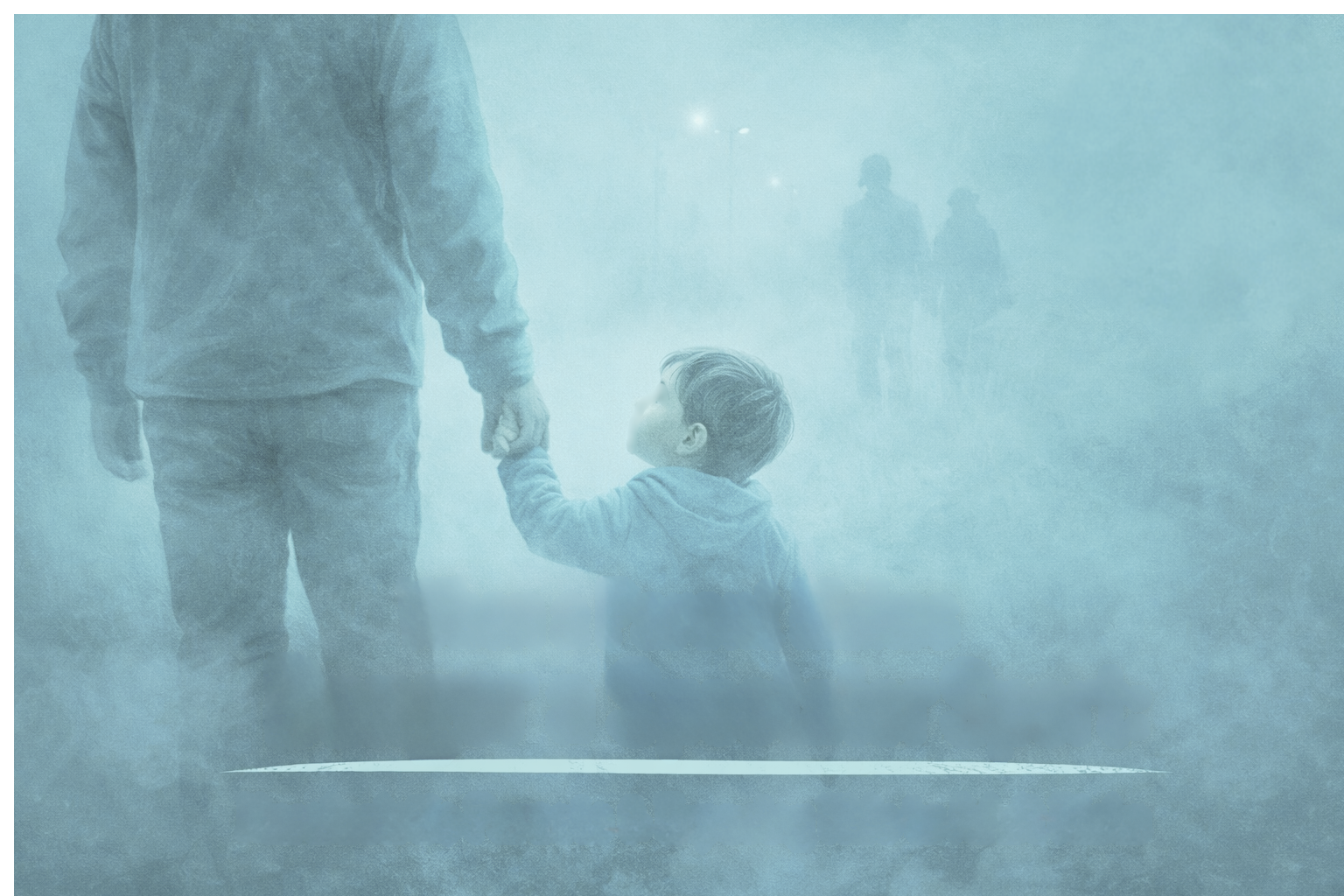
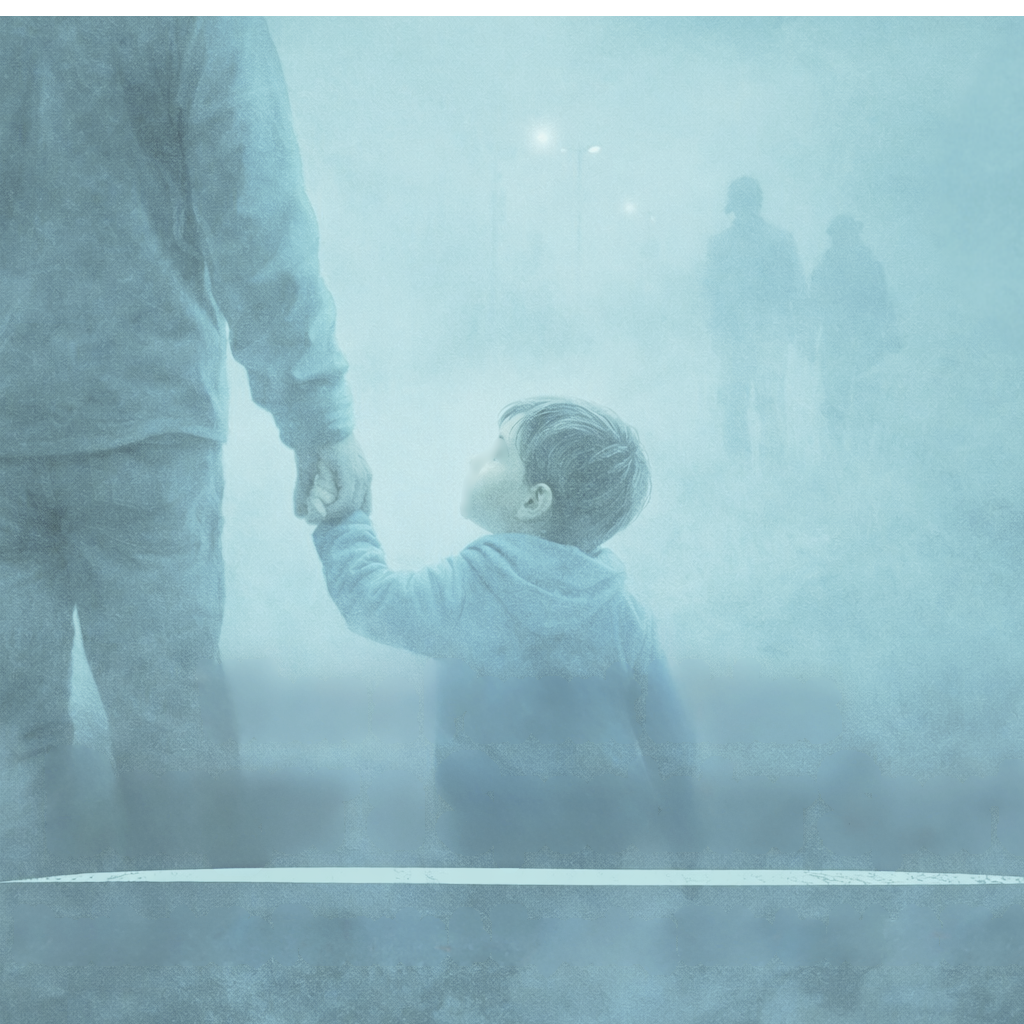
Most parents run a pretty basic operating system: protect the child, reduce unnecessary risk, and keep adult material in the adult lane. In narcissistic family systems, that operating system can be corrupted. Some adult children describe being brought along for things that felt reckless, sexualized, illegal, or simply unsafe, and then being forced to react the “right” way: laugh, admire, stay quiet, or feel special for being included.
This can look like a parent using substances openly, driving into clearly dangerous situations, “pointing out” sex work or adult sexual material for shock value, or treating fear like entertainment. It is not just bad judgment. For many survivors, it feels like the parent wanted the child to witness it, absorb it, and carry it.
Research does not always label this exact pattern with the same plain language survivors use. But the components of it are well described across several overlapping areas: narcissistic traits in parenting, boundary violations and enmeshment, sadism and antagonism, and the effects of parental substance misuse and other household dangers on children.
The “why” behind it: common drivers in narcissistic family systems
Not every narcissistic parent does this, and not every exposure is intentional. Some of it is neglect and impulsivity, some of it is performative, and sometimes it is both. Here are the most common psychological drivers that map onto what adult children report.
1) The child as an audience, not a person
A core theme in narcissistic parenting is treating the child as an extension of the parent, not a separate developing human with needs and limits. When the child is an audience, “including” them in adult risk can serve the parent’s emotional goals: feeling powerful, impressive, fearless, desirable, street smart, or untouchable/above it all.
The child’s fear or confusion is inconvenient, because it ruins the narcissistic parent’s performance.
2) Boundary violations as a lifestyle
Healthy parents maintain boundaries around adult topics, adult relationships, and adult behavior. In many narcissistic systems, boundaries are thin or nonexistent. Sexualized comments, inappropriate disclosures, adult conversations, and adult environments can show up early. The parent may frame it as “honesty,” “being real,” or “toughening you up,” but the effect is the same: the child is placed in a role they cannot emotionally metabolize.
This is closely related to enmeshment and parent/child role confusion. The child becomes a companion, a confidant, or a prop.
3) Thrill-seeking, status, and the need to feel “above the rules”
There is solid evidence that narcissistic traits, especially grandiose narcissism, are associated with greater risk taking and with perceiving more “benefit” and less “risk” in dangerous behavior. When you combine that with a kid in the passenger seat, you get a dangerous mismatch: the parent experiences the situation as exciting, funny, or validating, while the child experiences it as threat.
In this setup, the parent may even enjoy the child’s reaction because it proves the parent’s power: “Look what I can do. Look what you have to tolerate.”
4) Antagonism, cruelty, and the “sadistic edge”
Some narcissistic presentations include overt cruelty or a sadistic streak. In those cases, fear itself becomes rewarding. A parent who enjoys control may provoke discomfort on purpose, then mock the child for being scared or “too sensitive.” If the child freezes, dissociates, or goes numb, the parent may interpret that as loyalty or weakness, either way it feeds the dynamic.
This is one reason some adult children describe these moments as feeling “predatory,” even when the parent insists it was “no big deal.”
5) Addiction, impairment, and normalization of danger
In families where a parent has a substance use disorder, children are more likely to be exposed to unsafe situations, unpredictable behavior, neglect, and adult themes. Sometimes the narcissistic piece is not the only piece. You can have narcissistic traits plus addiction, plus impulsivity, plus denial. That combination often produces a home where the child’s job becomes scanning for danger, managing the adult’s mood, and pretending things are normal.
The child learns: reality is whatever the parent says it is.
What it does to the child’s nervous system and development
A child exposed to adult danger is not just “seeing too much.” They are being trained by experience.
- Chronic unpredictability shrinks felt safety. The child cannot reliably predict what will happen next, whether the parent will protect them, or whether the parent is the danger.
- Hypervigilance becomes a skill set. Many adult children become experts at reading micro shifts in tone, facial expression, and context because their safety depended on it.
- Shame gets baked in. Kids often assume, “If this is happening to me, something is off about me that must make it normal.” Shame is sticky because it makes the child less likely to tell anyone.
- Reality testing gets damaged. When a parent treats danger like a joke, or denies it afterward, the child’s perception is attacked. Over time, that confusion can feel like living in a fog of dissociation.
Why it is so destabilizing to accept as an adult
Most adult children do not struggle with the facts alone. They struggle with what the facts mean.
Accepting that a parent exposed you to danger on purpose can trigger a very specific kind of grief. It is sadness and a collision between two truths:
- You needed your parent to be safe.
- Your parent was not safe, and sometimes used your fear for their own emotional payoff.
That collision can activate betrayal trauma responses. Many survivors describe delayed recognition, minimization, memory gaps, or a strong urge to defend the parent even while feeling disgust or rage. This is survival wiring in action. When the person you depend on is the one harming you, full awareness can feel threatening, because it creates cognitive dissonance and it forces a child level question: “Who protects me now?”
As adults, that old survival strategy can show up as:
- second guessing your own memories
- minimizing what happened (“it wasn’t that bad”)
- feeling guilty for “making them the bad guy”
- emotional flashbacks when you witness similar risks with other children
- anger that arrives late with the dial turned all the way up
Naming it without overclaiming
While reading this, you may want a clear label: “This is typical of narcissistic parents.” The honest, clinically realistic truth is:
- The exact behavior pattern can vary, and research does not always study it as one single named phenomenon.
- But the building blocks are well supported: narcissistic traits in parents correlate with harmful parenting patterns and child maladjustment; narcissistic traits correlate with risk taking; boundary violations and role confusion are common in narcissistic family systems; and exposure to parental substance misuse and household dysfunction is consistently linked to adverse outcomes for children.
- And, ultimately, enough of us have experienced it to know in our bones that putting their children in harm’s way, emotionally, physically, or in other ways, is too common with narcissistic parents.
So when adult children say, “This wasn’t random. It was a pattern,” they are not making it up. They are describing an all too recognizable constellation of dynamics.
A grounded takeaway for survivors
If you grew up in a home where danger was treated like entertainment or “no big deal,” your nervous system likely adapted exactly the way it had to. The destabilization you feel now is often the mind catching up to what the body knew all along.
Healing usually involves two parallel tasks:
- rebuilding reality-trust (your perception counts)
- rebuilding safety-trust (your body can learn what safe feels like, not just what unsafe demands)
And yes, it is painful to admit that a parent might have enjoyed exposing you to things you never should have had to carry. Painful, and clarifying. Clarity is not cruelty, it’s the start of choosing a different life.
References (APA)
Babakr, Z. H., Majeed, K., Mohammadamin, P., & Kakamad, F. H. (2023). Risk-taking behaviour: The role of dark triad traits, impulsivity, and sensation seeking. BMC Psychology, 11, Article 64. https://doi.org/10.1186/s40359-023-01077-7
Broekhof, R., Nordahl, H. M., & Nordahl, H. M. (2023). Adverse childhood experiences and their association with substance use disorders: A prospective population study. Addictive Behaviors, 140, 107620. https://doi.org/10.1016/j.addbeh.2023.107620
Centers for Disease Control and Prevention. (2025, September 24). About adverse childhood experiences (ACEs). https://www.cdc.gov/aces/about/index.html
Estlein, R., Kuhl, P., & Taubner, S. (2024). Maternal narcissism and child maladjustment: A dyadic study. Current Psychology. https://doi.org/10.1007/s12144-024-06993-4
Felitti, V. J., Anda, R. F., Nordenberg, D., Williamson, D. F., Spitz, A. M., Edwards, V., Koss, M. P., & Marks, J. S. (1998). Relationship of childhood abuse and household dysfunction to many of the leading causes of death in adults: The Adverse Childhood Experiences (ACE) Study. American Journal of Preventive Medicine, 14(4), 245–258. https://doi.org/10.1016/S0749-3797(98)00017-8
Foster, J. D., Shenesey, J. W., & Goff, J. S. (2009). Why do narcissists take more risks? Testing the roles of perceived risks and benefits of risky behaviors. Journal of Research in Personality, 43(4), 693–697. https://doi.org/10.1016/j.jrp.2009.03.008
Goldner-Vukov, M., & Moore, L. J. (2010). Malignant narcissism: From fairy tales to harsh reality. Psychiatry, Psychology and Law, 17(3), 381–391. https://doi.org/10.1080/13218710903566902
Lander, L., Howsare, J., & Byrne, M. (2013). The impact of substance use disorders on families and children: From theory to practice. Social Work in Public Health, 28(3–4), 194–205. https://doi.org/10.1080/19371918.2013.759005
McNally, R. J. (2007). Betrayal trauma theory: A critical appraisal. Memory, 15(3), 280–294. https://doi.org/10.1080/09658210701256504
Orovou, E., & colleagues. (2025). Impact of parental narcissistic personality disorder on parent-child relationship quality and child well-being: A systematic review. Cureus, 17, e442308. https://www.cureus.com/articles/442308
Parolin, M., Simonelli, A., Mapelli, D., Sacco, M., & Cristofalo, P. (2016). Parental substance misuse as an early traumatic event: Attachment and psychopathological outcomes in young adulthood. Frontiers in Psychology, 7, 887. https://doi.org/10.3389/fpsyg.2016.00887
Solis, J. M., Shadur, J. M., Burns, A. R., & Hussong, A. M. (2012). Understanding the diverse needs of children whose parents abuse substances. Current Drug Abuse Reviews, 5(2), 135–147. https://doi.org/10.2174/1874473711205020135
Tedgård, E., Råstam, M., & Wirtberg, I. (2019). An upbringing with substance-abusing parents: Experiences of adult children. Nordic Studies on Alcohol and Drugs, 36(5), 485–499. https://doi.org/10.1177/145507251881430