

Protecting Your Sensitivity After Narcissistic Abuse

By Brenda Stephens, Licensed Professional Clinical Counselor
I am a licensed therapist who works exclusively with survivors of narcissistic abuse, including adult children of narcissistic parents. Over and over I see the same pattern:
You are deeply empathic. You read a room in two seconds. You feel other people’s moods in your bones. You were praised for being “mature,” “understanding,” “the strong one,” or “easy.”
And your nervous system is exhausted.
Many survivors tell me, “I love that I am sensitive, but it feels like a curse. Everything hits me.” We do not need to get rid of our sensitivity. We are going to talk about how to protect and conserve it so you are not constantly flooded by other people’s chaos.
The Child Who Felt Everything
If you were raised by a narcissistic or emotionally unavailable parent, you probably became the emotional smoke detector in your home.
- You scanned your parent’s tone, footsteps, and facial expressions.
- You learned to anticipate explosions, silence, sulking, or guilt trips.
- You often felt responsible for keeping the peace.
Research on kids who grow up with emotional abuse and narcissistic parenting shows high rates of complex trauma, chronic anxiety, hypervigilance, and identity confusion in adulthood.
On top of that, some people are born with sensory processing sensitivity. They notice more details, feel emotions intensely, and are more reactive to noise, light, and social tension. Studies suggest that when this natural sensitivity meets childhood trauma, it can increase vulnerability to depression, anxiety, and other symptoms.
So you had two things happening at once:
- You were likely born sensitive.
- You were trained to use that sensitivity to stay safe around unpredictable adults.
No wonder your system is tired.
Empathy, Hypervigilance, and Your Threat System
Hypervigilance is not “being dramatic,” it’s a real trauma symptom. It means your brain is stuck on “high alert,” always scanning for danger, even in safe situations.
When you are that alert all the time:
- Your attention is glued to other people’s micro expressions.
- You overthink every text, sigh, or pause.
- You feel guilty for relaxing because danger could “drop” at any moment.
Now add high empathy on top of that. You are not just noticing danger. You are also absorbing everyone’s feelings. Think of it as your nervous system running 20 browser tabs at once, this leaves us overwhelmed and exhausted.
The goal of recovery is not to be less empathic. We need to learn to stop treating our bodies like unpaid security staff for everyone else.
Step 1: Reframe Your Sensitivity As Something Worth Protecting
You were probably shamed for being “too sensitive.” Or used for your sensitivity, as the family therapist, mediator, or caretaker.
Time to flip that narrative.
- Sensitivity is a capacity, not a flaw.
- It lets you attune, create, notice nuance, connect deeply, and offer genuine compassion.
- It also makes you more susceptible to overload, especially after trauma.
Try this reframe:
“My sensitivity is valuable. It is not up for public use anymore.”
You are the steward of this trait now. Not your parents. Not your ex. Not your current partner. Not everyone on the internet.
Quick practice:
- Write down 5 ways your sensitivity benefits you or others.
- Then write 5 ways it gets exploited or drained.
- Draw a line through the “exploited” list. That is your new boundary map.
Step 2: Put a Fence Around Your Nervous System
Your nervous system is not a public park. It needs a fence, gates, and closing hours.
From a trauma and polyvagal perspective, many survivors stay stuck in fight or flight, even in safe environments. This chronic activation keeps the threat system on high and feeds hypervigilance and sensory overload.
You can start to loosen that grip with simple, repeatable body practices. The key word is repeatable, not perfect.
Ideas to protect your system:
- Nervous system “bookends.”
- Morning: 3 minutes of slow breathing, longer exhale than inhale, while pressing your feet into the floor.
- Night: 3 minutes of gentle stretching, hand on your chest or belly, telling yourself “I get to rest now.”
- Micro-pauses after contact.
Instead of jumping straight from a hard session, conversation, or text, into the next thing, take 60 seconds to shake out your hands, step outside, or drink water and look out a window. Small reset, big payoff. - Sensory edits.
Highly sensitive nervous systems do better with fewer incoming signals. Turn off alerts. Use earplugs in busy places. Dim lights when you can. This is not “extra.” It is basic maintenance.
None of this erases trauma on its own. It does tell your body, again and again, “We are safe in this moment.”
Step 3: Separate Empathy From Responsibility
Adult children of narcissists often confuse “I feel your pain” with “I must fix your pain.”
That confusion did not come from nowhere. Narcissistic parents routinely put their emotional burdens on their kids, then punished them for not doing it right. Over time, many survivors internalize the belief that their job is to manage everyone’s mood.
You can feel for someone without carrying them.
A simple script you can borrow:
- “I care that you are hurting. I am not able to fix this for you, and that does not mean I do not care.”
- “I feel myself getting overloaded. I am going to pause this conversation and come back to it later.”
- “I love you, and I am not available to be your only support.”
Boundary check-ins:
When you notice yourself getting flooded by someone’s story, ask:
- Is this my feeling or theirs?
- Did they ask for support, or did I volunteer without checking my capacity?
- What is the smallest, kindest thing I can offer without abandoning myself?
If the answer is “I actually have nothing to give right now,” that is a valid answer.
Step 4: Control What Reaches You
If your nervous system is wired to notice and care, then the volume of incoming information matters.
We live in a world that can send you 200 people’s pain before breakfast. For trauma survivors with high sensitivity, constant exposure to news, social media, and emotional content can intensify stress, sleep problems, and depressive symptoms. Filters are essential to your wellbeing.
Practical filters to try:
- News and socials on purpose, not by accident.
Decide when you will check them and for how long. Do not let them be the first and last thing your brain sees every day. A member of my support group says they limit their social media consumption to no more than every three days. I think that’s worth trying! - Follow accounts that regulate you, not just educate you.
If you are constantly reading about trauma and narcissism, mix in accounts that make you laugh, breathe, or remember you have a body. - Limit emotional “jobs” in your life.
You do not have to be the go to support person for every coworker, sibling, or group chat.
Think of your attention like money. You do not hand your wallet to whoever shouts the loudest.
Step 5: Turn Your Empathy Inward
Here is the part many survivors hate at first:
You need to start treating yourself the way you treat everyone else (maybe read that again).
Self compassion is not a motivational poster concept. It is a measurable, protective factor in trauma recovery. Research shows that higher self compassion is linked with fewer trauma symptoms, more post traumatic growth, and better mental and physical health in trauma survivors.
In practical terms, self compassion can sound like:
- “Of course I am overwhelmed and tired. My nervous system has been working overtime for decades.”
- “It makes sense that I scan for danger. That used to keep me safe.”
- “I am allowed to build a life where my body does not have to work this hard anymore.”
A small daily exercise:
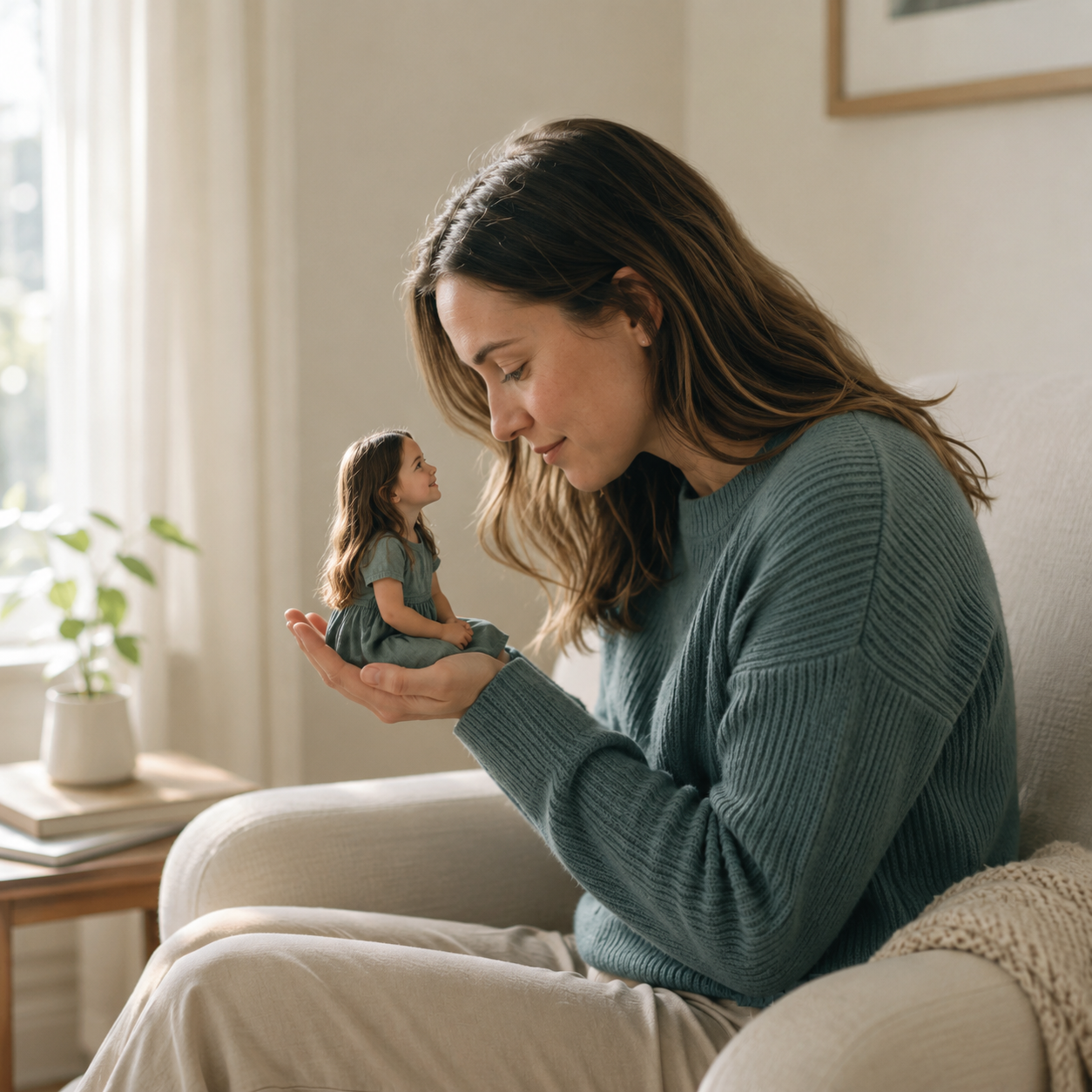
- Think of a younger version of you in that narcissistic home.
- Picture how hard she worked to read the room and keep the peace.
- Place a hand on your chest and say, “Thank you for how hard you tried. I am taking it from here.”
You are not erasing her, you are simply relieving her from a duty she never should have had in the first place.
Step 6: Choose Where Your Sensitivity Gets To Shine
Your sensitivity is going to show up somewhere. The question is whether it is constantly putting out fires or helping you build a life that actually fits you.
Some ideas for “good trouble” for your sensitivity:
- Deep one on one friendships instead of twenty surface level connections
- Work that involves meaning, integrity, or creativity, not just surviving someone else’s drama or attitude
- Quiet joy: animals, nature, books, art, music, spiritual practices
- Communities where empathy is mutual, not one sided
Research on adult children of narcissists highlights long term struggles with self definition and identity. Part of recovering your identity is asking, “If my sensitivity was never used against me, where would I want it to flow?”
That question is not selfish. It is necessary.
You Are Not “Too Much.” You Are Too Unprotected.
If you grew up in a narcissistic system, nobody taught you how to protect your sensitivity. They taught you how to use it for their comfort.
So here is the reframe I want you to sit with:
- You are not too sensitive.
- You are finally aware of how much you have been carrying.
- You are allowed to build a life where your empathy is a gift, not a job description.
Protecting your sensitivity is not you “hardening.” It is you finally giving your nervous system the support and limits it should have always had.
Your sensitivity does not need to go away but it does need to be protected.
If this spoke to you
We specialize in working with survivors of narcissistic abuse, especially women who grew up with narcissistic or emotionally immature parents and find themselves repeating painful patterns in love.
You can learn more or connect with me through narctrauma.com, and you can listen to more conversations like this on my podcast”“Two Queens and a Joker: MyNarcissist’ss Ex and Me””
If you want support that understands narcissistic systems and the specific pain of narcissistic abuse, you can:
- Work with us
Ready to start healing? Book an appointment or join a group.
Therapy, groups, and intensives
Contact & waitlist - Trauma Toolbox app
Guided grounding, micro-practices, body resets, and crisis-calming audio in under five minutes.
Get the app - Podcast: Two Queens and a Joker: MyNarcissist’ss Ex and Me
Real talk about recovery, parenting, and rebuilding a life you actually want.
Listen on YouTube
Listen on Spotify
Listen on Apple Podcasts
References
Aron, E. N., & Aron, A. (1997). Sensory processing sensitivity and its relation to introversion and emotionality. Journal of Personality and Social Psychology, 73(2), 345–368.
Aron, E. N., Aron, A., & Jagiellowicz, J. (2012). Sensory processing sensitivity: A review in the light of the evolution of biological responsivity. Personality and Social Psychology Review, 16(3), 262–282.
Bishop, D. A. (2024). Perceived parental narcissism: The adult child’s search of self (Doctoral dissertation). Liberty University.
Germer, C. K., & Neff, K. D. (2015). Cultivating self-compassion in trauma survivors. In V. M. Follette, J. Briere, D. Rozelle, J. W. Hopper, & D. I. Rome (Eds.), Mindfulness-oriented interventions for trauma: Integrating contemplative practices (pp. 43–58). Guilford Press.
Hoffart, A., Øktedalen, T., & Langkaas, T. F. (2015). Self-compassion influences PTSD symptoms in the process of change in trauma-focused cognitive-behavioral therapies: A study of within-person processes. Frontiers in Psychology, 6, 1273.
Jabeen, F., Anser, M. K., & Hassan, A. (2021). An adaptive agent model for the effects of parental narcissism. Frontiers in Psychology, 12, 635333.
Leggio, J. N. (2018). Mental health outcomes for adult children of narcissistic parents (Doctoral dissertation). ProQuest Dissertations Publishing.
Porges, S. W. (2022). Polyvagal theory: A science of safety. Frontiers in Integrative Neuroscience, 16, 871227.
Self-Compassion.org. (2020). Self-compassion in PTSD [White paper]. In C. Braehler & K. D. Neff, Emotion in posttraumatic stress disorder: Etiology, assessment, neurobiology, and treatment (pp. 569–589).
Psychology Today. (2014, May 1). Narcissistic parents’ psychological effect on their children. In Insight is 20/20 column.